AI-driven telescope succeeds in its first observation campaigns in Chile
An automatic planner developed by the SkAI institute has decided on its own where to point the Blanco telescope during two campaigns, in the spring and summer of 2026.
AM-IA brings together news, research papers and applications relating to artificial intelligence published around the world into a single feed — and makes them available in your European language at the click of a button.
Scroll to browse · Click to filter
An automatic planner developed by the SkAI institute has decided on its own where to point the Blanco telescope during two campaigns, in the spring and summer of 2026.
The Munich Regional Court has ruled that the US start-up Suno has violated the rights of the collecting society GEMA by using protected securities to train its AI.
Google DeepMind presents a new generation of vision-language-action models capable of coordinating walking, posture and object manipulation on a humanoid robot.
The world's largest electric vehicle manufacturer is presenting functional humanoid robots in August, which will interact with visitors to its Chinese exhibition centers.
The Pennsylvania health network is expanding its partnership with Hippocratic AI: its agent Ana already handles more than 160,000 calls per month and is out of the appointment scheduling niche.
A multi-attribute, moving-demand, sealed envelope auction benchmark puts eleven cutting-edge models in a position to set prices against rivals who react in real time.
Based on DeepMind’s AlphaEarth Foundations model, the product transforms the static annual dataset into on-demand representations, by area and by period.
The Ruflo agent orchestration platform left its MCP bridge open to the network. Maximum CVSS score of 10; remote command execution without any access tokens.
Whilst the UN Secretary-General is calling for all data centres to be powered by renewable energy by 2030, investment in gas and coal is on the rise again.
The Israeli cybersecurity firm Cyera is acquiring Oasis Security, a specialist in non-human identity management, to manage the proliferation of AI agents within organisations.
Through the APEX and ARMOR projects, the national laboratory is having staff control the equipment and experimental parameters. The analysis of 3D-printed images has been reduced from several minutes to a few milliseconds.
Adobe Research and Johns Hopkins are transforming an image or video into a navigable environment at 16 frames per second, without any control drift or memory loss.
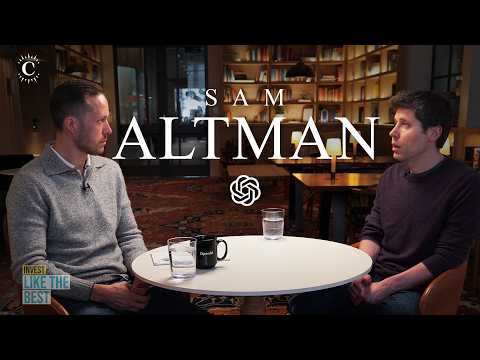
Le patron d'OpenAI revient longuement sur la course à la puissance de calcul, l'horizon de l'IA générale et la place laissée à l'initiative humaine.
A report by the American Psychological Association notes that a growing number of patients are using AI chatbots to complement, or even partially replace, conventional therapeutic care.
A team led from Princeton has reduced 80 million light curves to 2.5 million using machine learning, cutting the analysis time from three and a half years to just a few weeks.
The ‘Omnibus’ Regulation, which comes into force at the end of July 2026, postpones the most onerous requirements of the European AI Regulation by more than a year, whilst leaving the transparency obligations unchanged.
An exploratory study highlights that technical training in AI tools alone is not enough: teachers need, above all, long-term pedagogical and institutional support.
Anthropic’s new flagship model allows users to choose the level of reasoning effort devoted to each query, thereby striking a balance between cost and capability.
The start-up claims to offer the first agents dedicated to agency management, where emails, technical specifications, schedules, inspection notes and budgets are currently managed in separate tools.
Thirteen models were tested on three synthetic tasks: inserting semantically empty tokens significantly improves performance, without leaving any interpretable trace.